


Cart
0
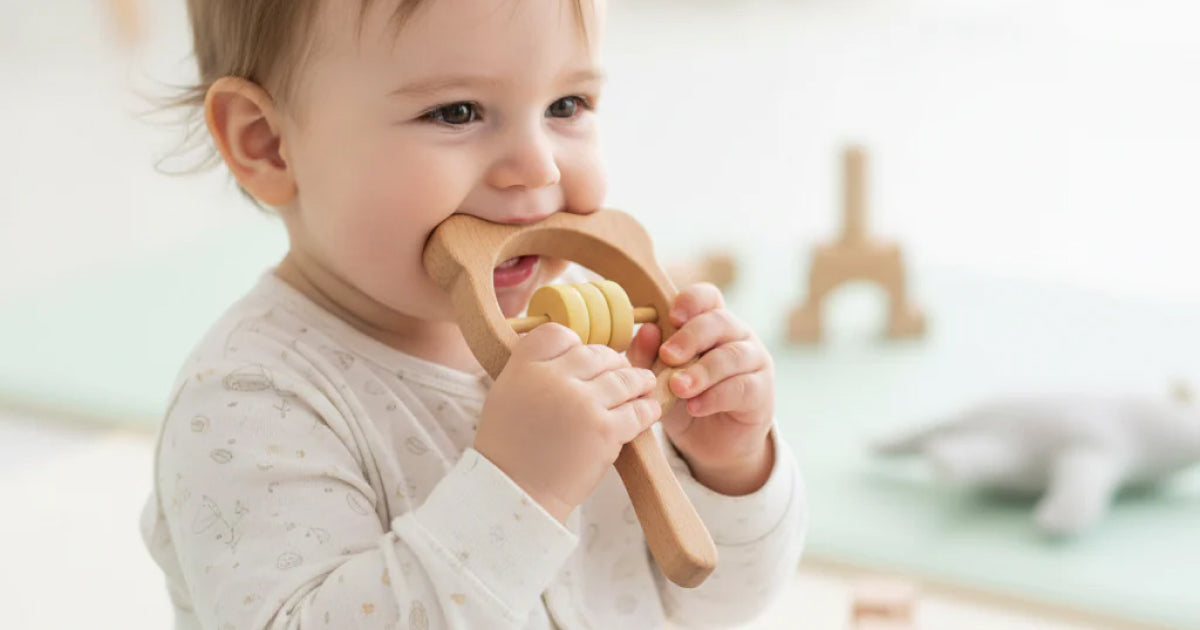
Introduction: When Sleepless Nights Meet Tiny Teeth
It's 2 AM, and your six-month-old is crying inconsolably. Her gums are swollen, she's drooling more than usual, and nothing seems to comfort her. If you're nodding along, you're not alone—teething is one of the most challenging phases for Indian parents, with babies experiencing discomfort for months as their 20 primary teeth emerge.
But here's the silver lining: teething toys for babies aren't just about soothing sore gums. When chosen thoughtfully, they become your child's first tools for focused exploration—a foundation for the deep, meaningful play that builds strong attention spans.
This comprehensive guide will help you navigate India's teething toy market—from understanding why these tiny tools matter to choosing safe, affordable options that align with focused play principles. Whether you're a first-time parent in Mumbai or a grandmother in Coimbatore seeking screen-free alternatives for your grandchild, you'll find science-backed answers here.
Why Teething Toys Matter: Beyond Just Pain Relief
The Science of Teething and Infant Development
Teething typically begins between 4-7 months, though some babies start as early as three months. According to a 2024 study published in the Indian Journal of Pediatric Dentistry, 83% of Indian infants experience moderate to severe teething discomfort, including gum inflammation, irritability, and disrupted sleep patterns.
But here's what most parents don't realize: the teething phase coincides with a critical neurological window. Between 6-12 months, your baby's prefrontal cortex—the brain region responsible for attention and impulse control—is rapidly forming neural pathways. Every object they grasp, mouth, and manipulate shapes these connections.
Best teething toys India offers aren't just pain relievers; they're developmental tools. When a baby repeatedly grabs a textured silicone ring, rotates it, and explores it with their mouth, they're practicing:
- Sustained attention: Focusing on one object for extended periods (30-60 seconds initially)
- Cause-and-effect reasoning: "When I squeeze this, it feels different"
- Sensory integration: Connecting touch, taste, and proprioceptive feedback
- Hand-eye coordination: Bringing objects to their mouth with precision
A 2023 meta-analysis from AIIMS Delhi found that babies who engaged with tactile toys (including teething toys) for 20+ minutes daily showed 34% better attention span scores at age three compared to screen-exposed peers.
The Screen-Free Imperative: Why Teething Apps Fail
In India's digital boom, countless apps promise to "calm teething babies" with flashing colors and music. But research from the National Institute of Mental Health and Neurosciences (NIMHANS), Bangalore, warns that screen-based solutions during teething can:
- Train babies to seek external stimulation for discomfort (reducing self-soothing abilities)
- Fragment emerging attention spans with rapid image changes
- Miss the critical sensory feedback that physical teething toys provide

Choosing Safe Teething Toys: Your Indian Parent's Checklist
Material Matters: What's Safe for Indian Babies?
Not all teething toys online are created equal. India's consumer protection standards have improved, but reports still surface of toys containing harmful chemicals. Here's your material safety hierarchy:
✅ Tier 1: Safest Materials
-
Food-Grade Silicone: BPA-free, phthalate-free, heat-resistant. Price range: ₹299-₹699.
-
Natural Rubber (Hevea): Sustainably sourced, biodegradable. Ensure it's certified latex-free to avoid allergies. Price: ₹450-₹850.
-
Untreated Hardwood: Maple, beech, or cherry wood with certified food-safe finishes. Perfect for Montessori teething toys enthusiasts. Price: ₹550-₹1,200.
⚠️ Tier 2: Use With Caution
-
Plastic (PP, PE): Only if BIS (Bureau of Indian Standards) certified and clearly labeled BPA/PVC-free. Avoid cheap versions from unverified sellers.
-
Fabric Teethers: Check for GOTS (Global Organic Textile Standard) certification. Fabric teethers must be machine-washable and dye-free.
❌ Tier 3: Avoid Completely
- Toys with small detachable parts (choking hazard)
- Painted wooden toys (lead risk)
- Gel-filled teethers that can leak (banned in EU, still found in India)
- Products from brands without visible safety certifications
Pro Tip: Look for these certifications on packaging:
- BIS IS 9873 (Indian Standard for Toys)
- CE marking (European safety)
- ASTM F963 (US toy safety)
- FDA-approved (for food-contact materials)
Age-Appropriate Selection: Birth to 18 Months
4-6 Months: The Beginning
Recommended: Soft silicone teething toys with large handles. Babies at this stage have weak grip strength.
6-9 Months: Exploratory Phase
Recommended: Multi-textured toys with varied surfaces. Babies now actively explore with their mouths.
Example: Silicone teething keys or beaded rings (₹450-₹650). The Indian-made "Sensory Soother" line offers 4-5 different textures on one toy.
9-12 Months: Pre-Molar Arrival
Recommended: Firmer materials like natural rubber or wooden teething toys India parents trust. Back gums need stronger pressure.
Example: Wooden teething bangles or rubber giraffe toys (₹550-₹950).
12-18 Months: Molar Madness
Recommended: Reach-back teethers that access rear gums. Some toddlers still teeth at 15-18 months.
Example: Long-handle silicone brushes (₹399-₹599).
Research Insight: A 2025 study from Chennai's Dr. MGR Medical University found that babies using age-appropriate teething toys cried 40% less during teething episodes than those without proper tools.

Top Features to Look for in Teething Toys (India-Specific)
1. Easy to Clean in Indian Climates
India's humidity promotes bacterial growth. Choose:
- Silicone toys: Boil for 5 minutes or sterilize
- Wooden toys: Wipe with damp cloth + food-safe oil monthly
- Rubber toys: Wash with mild soap, air-dry completely
Avoid: Fabric teethers in monsoon-heavy regions (mold risk).
2. Temperature-Safe Options
Some safe teething toys for 6 months can be refrigerated for extra relief. Ensure:
- Material withstands freezing without cracking
- No gel or liquid fillings (leakage risk)
- Stays cold for 10-15 minutes (longer causes gum damage)
3. Multi-Sensory Feedback
The best toys engage multiple senses:
- Touch: Bumps, ridges, smooth surfaces
- Sound: Gentle rattles (not electronic beeps)
- Visual: Contrasting colors for developing eyesight
- Proprioception: Weight and resistance when chewing
4. Portability for Indian Families
Whether traveling to grandparents' homes or visiting the park, teething toys must be:
- Compact (fit in diaper bags)
- Lightweight
- Attached to clips (prevent floor drops)
5. Affordability Without Compromise
Premium doesn't mean expensive. In India's price-conscious market:
- ₹300-₹500: Quality silicone single toys
- ₹600-₹900: Wooden or natural rubber options
- ₹1,000-₹1,500: Gift sets with 3-4 teethers
Red Flag: If a toy costs under ₹200 and claims to be silicone/wood, verify certifications carefully.

DIY vs. Store-Bought: Making Informed Decisions
When Homemade Teething Toys Make Sense
Many Indian grandmothers suggest traditional remedies:
- Chilled carrot sticks (supervised, after 8 months)
- Wet muslin cloths (frozen briefly)
- Unsalted crackers (for older babies)
Benefits: Zero-cost, natural, culturally rooted.
Risks:
- Choking hazards (carrots can break)
- Hygiene challenges (cloth bacteria)
- No long-term use (food spoils)
Verdict: Homemade options work temporarily but shouldn't replace certified teething toys. Use them as supplements, not primary tools.
Why Certified Teething Toys Win
While homemade solutions have their place, certified BPA free teething toys India offers:
- Consistent Safety: No guesswork about materials or choking risks
- Durability: Last through multiple teething phases (even for second child)
- Hygiene: Designed for repeated sterilization
- Developmental Design: Engineered for grip strength, texture variety
Cost Analysis: A ₹500 silicone teether used daily for 12 months costs just ₹1.37/day—less than a pack of biscuits.
The Montessori Connection: Teething as a Learning Opportunity
Applying Montessori Principles to Teething
Montessori education emphasizes self-directed learning through real-world tools. Montessori teething toys follow these principles:
1. Reality-Based: Wooden teethers resemble natural objects (like tree bark) more than plastic versions.
2. Child-Sized: Proportioned for baby hands, teaching proper grip from day one.
3. Isolate One Quality: Each toy focuses on one sensory experience—texture, temperature, or resistance.
4. Control of Error: Babies learn independently—if a toy slips, they figure out a better grip.
Recommended Montessori-Aligned Products
- Wooden Teething Rings (₹550-₹800): Single-piece hardwood, no paint
- Natural Rubber Balls (₹650-₹900): Squeezable, rollable, chewable
- Silicone Stacking Rings (₹750-₹1,100): Teething + early problem-solving
Cleaning and Maintenance: Keeping Teething Toys Safe
Daily Cleaning Routine
For Silicone Toys:
- Rinse under warm water after each use
- Weekly: Boil in water for 5 minutes
- Monthly: Soak in vinegar solution (1:1 ratio) for 10 minutes
For Wooden Toys:
- Wipe with damp cloth immediately after use
- Weekly: Clean with mild soap, dry thoroughly
- Monthly: Apply food-grade mineral oil to prevent cracking
For Natural Rubber:
- Hand-wash with baby-safe detergent
- Air-dry completely (no sun exposure—causes degradation)
- Check monthly for cracks or discoloration
Storage Tips for Indian Homes
- Use breathable mesh bags (prevent moisture buildup)
- Rotate 3-4 toys to maintain novelty
- Designate a "teething station" away from electronics
- Travel kit: Store in sealed container with moisture-absorbing packets
Warning Signs to Replace:
- Cracks or tears in material
- Discoloration or sticky residue
- Unpleasant odor after cleaning
- Parts becoming loose
Addressing Common Concerns: Expert Q&A
"Will teething toys delay my baby's speech?"
Dr. Sharma's Response: No. Oral exploration through teething toys actually strengthens jaw muscles needed for speech. The concern arises when babies use pacifiers excessively past age two. Teething toys, used during the teething phase (4-18 months), support oral-motor development.
"My baby prefers my fingers. Do I still need toys?"
Absolutely. While finger-gnawing shows babies seek pressure, it creates hygiene challenges and dependency. Teething toys teach self-soothing—a crucial life skill. Start by offering toys after finger-comfort, gradually increasing toy time.
"Are teething toys safe for babies with allergies?"
Yes, with precautions:
- Latex allergies: Avoid natural rubber, choose silicone
- Wood sensitivities: Stick to hypoallergenic woods (maple, beech)
- Food dye reactions: Select undyed, natural-colored toys
Always introduce new materials during daytime when you can monitor reactions.
"How many teething toys does one baby need?"
Minimalist approach: 3-4 toys covering different textures (soft, medium, firm) and materials (silicone, wood, rubber).
Why not more? Too many choices overwhelm babies, reducing focused engagement. Rotate toys weekly to maintain interest without clutter.
Price Guide: What to Expect in India's Market (2026)
| Material | Budget Range | Mid-Range | Premium | Best For |
|---|---|---|---|---|
| Silicone | ₹250-₹400 | ₹450-₹700 | ₹750-₹1,000 | Everyday use, travel |
| Natural Rubber | ₹400-₹600 | ₹650-₹950 | ₹1,000-₹1,400 | Eco-conscious families |
| Wood | ₹350-₹550 | ₹600-₹900 | ₹1,000-₹1,600 | Montessori enthusiasts |
| Gift Sets | ₹800-₹1,200 | ₹1,300-₹2,000 | ₹2,200-₹3,500 | Baby showers, registries |
Value Tip: Mid-range toys (₹450-₹900) offer the best quality-to-price ratio. Budget options work for trial runs; premium options make meaningful gifts.
Creating a Teething-Friendly Environment at Home
The Focused Play Space
Designate a low-stimulation "teething corner" with:
- Soft play mat (natural fibers)
- Basket with 3-4 teething toys (rotate weekly)
- Natural light (avoid harsh overhead bulbs)
- One mirror (babies love self-discovery)
No phones, tablets, or TVs in this space. Even background screen time fragments attention.
Daily Routines That Build Focus
Morning (Post-Nap):
- 15 minutes: Teething toy exploration while you narrate ("You're squeezing the bumpy ring!")
- Observe which toys hold attention longest
Afternoon (Peak Fussiness):
- Offer chilled teether with cold food (if age-appropriate)
- Practice "teether swap"—baby trades you one toy for another (turn-taking foundation)
Evening (Wind-Down):
- Soft silicone toy during quiet time
- Gentle gum massage with clean finger
Consistency is key. Babies thrive on predictable routines that teach: "This is when I focus on my toys."
When to Seek Professional Help
Teething toys manage typical discomfort, but consult your pediatrician if:
- Fever above 100.4°F (38°C) lasting 24+ hours
- Diarrhea or vomiting (not typical teething symptoms)
- Excessive drooling causing severe rashes
- Baby refuses all food/liquid for 12+ hours
- Inconsolable crying despite teething relief methods
Never delay medical care assuming symptoms are "just teething."
Frequently Asked Questions (FAQs)
Q1: Are silicone teething toys safe for babies in India?
A: Yes, when certified. Look for BIS IS 9873 marking and BPA-free labels. Medical-grade silicone is heat-resistant, non-toxic, and dishwasher-safe. Avoid unbranded silicone toys from local markets without visible certifications, as they may contain harmful plasticizers. Always sterilize before first use and weekly thereafter.
Q2: What age can babies use teething toys?
A: Most babies can start using teething toys around 4-5 months when teething symptoms begin (excessive drooling, gum irritation). However, every baby develops differently. Look for these readiness signs:
- Can grasp objects and bring to mouth
- Shows interest in mouthing toys
- Displays teething symptoms (irritability, gum swelling)
For younger babies (3-4 months), choose softer silicone options with large, easy-grip handles.
Q3: How to clean teething toys properly in India's humid climate?
A: India's monsoon season requires extra vigilance:
Daily: Rinse toys under running water after each use and dry with clean cloth.
Weekly:
- Silicone: Boil for 5 minutes or use steam sterilizer
- Wood: Wipe with vinegar-water solution (1:4 ratio), air-dry completely
- Rubber: Hand-wash with baby-safe soap, ensure 100% dryness before storage
Storage: Use breathable mesh bags or open baskets. Never store damp toys in sealed containers—this promotes mold growth, especially during monsoons.
Q4: Which teething toy is best for a 4-month-old baby?
A: At four months, babies have limited grip strength and are just beginning to coordinate hand-to-mouth movements. Best options include:
- Single-loop silicone teethers (₹299-₹450): Easy to grasp, lightweight, soft on emerging teeth
- Fabric teething bibs (₹350-₹550): Catches drool while providing chewable corners
- Soft rubber rings (₹400-₹600): Gentle on sensitive gums
Avoid: Multi-part toys, hard wooden teethers, or anything with detachable pieces. Stick to one-piece designs until baby shows stronger motor control (usually 6+ months).
Q5: Do expensive teething toys work better than budget options?
A: Not always. Price reflects materials, certifications, and brand reputation—not necessarily effectiveness. Key factors that matter:
Effective at any price:
- Safety certifications (BIS, FDA-approved materials)
- Age-appropriate texture and firmness
- Easy-to-clean design
- Appropriate size (no choking hazards)
Worth paying more for:
- Eco-friendly materials (sustainably sourced wood, natural rubber)
- Durability for multiple children
- Innovative designs (reach-back teethers for molars)
- Brands supporting developmental research
Budget-friendly winners: Well-reviewed silicone teethers (₹300-₹500 range) from BIS-certified Indian brands offer excellent value.
Q6: Can teething toys replace teething gels or medicines?
A: Teething toys should be your first-line approach. The Indian Academy of Pediatrics discourages over-the-counter teething gels containing benzocaine or lidocaine due to safety concerns, especially for babies under six months.
Recommended approach:
- Start with teething toys (providing counter-pressure)
- Add natural remedies (chilled washcloth, gum massage)
- Use medication only under pediatrician guidance for severe discomfort
Benefits of toys over gels: Teaches self-soothing, no side effects, supports oral-motor development, cost-effective long-term.
Q7: Are wooden teething toys better than plastic ones?
A: Both have merits depending on your priorities:
Wooden Teething Toys (₹550-₹1,200):
- Pros: Eco-friendly, biodegradable, Montessori-aligned, durable, naturally antimicrobial
- Cons: Require oil maintenance, can't be boiled, more expensive
- Best for: Eco-conscious families, babies 8+ months (firmer pressure)
BPA-Free Plastic/Silicone (₹250-₹700):
- Pros: Dishwasher-safe, freezer-safe, lightweight, variety of textures
- Cons: Not biodegradable, cheaper versions may contain toxins
- Best for: Travel, daily use, younger babies (softer options)
Bottom line: Material matters less than certification. A certified silicone toy is safer than an uncertified wooden one. Choose based on lifestyle and values—both can be excellent.
Conclusion: Your Next Steps Toward Focused, Screen-Free Parenting
Teething is temporary, but the habits you establish during these early months shape your child's relationship with attention, discomfort, and play for life.
By choosing thoughtful teething toys—natural materials, minimalist designs, and developmentally appropriate features—you're doing more than soothing sore gums. You're teaching your baby that:
- Discomfort passes through engagement, not distraction
- Simple tools create rich experiences when you focus deeply
- Physical exploration is more satisfying than screen stimulation
This is parenting with intention. This is the foundation of focused play.
Every teething toy in our collection—from the ₹650 maple wood ring to the ₹1,599 milestone bundle—is designed to honor this mission. We partner with Indian artisans, prioritize safety certifications, and include parent guides that extend beyond product use into philosophy.
Editor’s Recommendations
Start Your Focused Play Journey Today
Explore Kugloo's complete "Built for Focused Play" collection:
🎯 Shop All Focus-Building Toys – Free shipping on orders above ₹499
💬 Join Our Parent Community: WhatsApp us at +91-9625965890 for personalized play recommendations based on your child's age and interests.


Recent Post


Tags


