


Cart
0
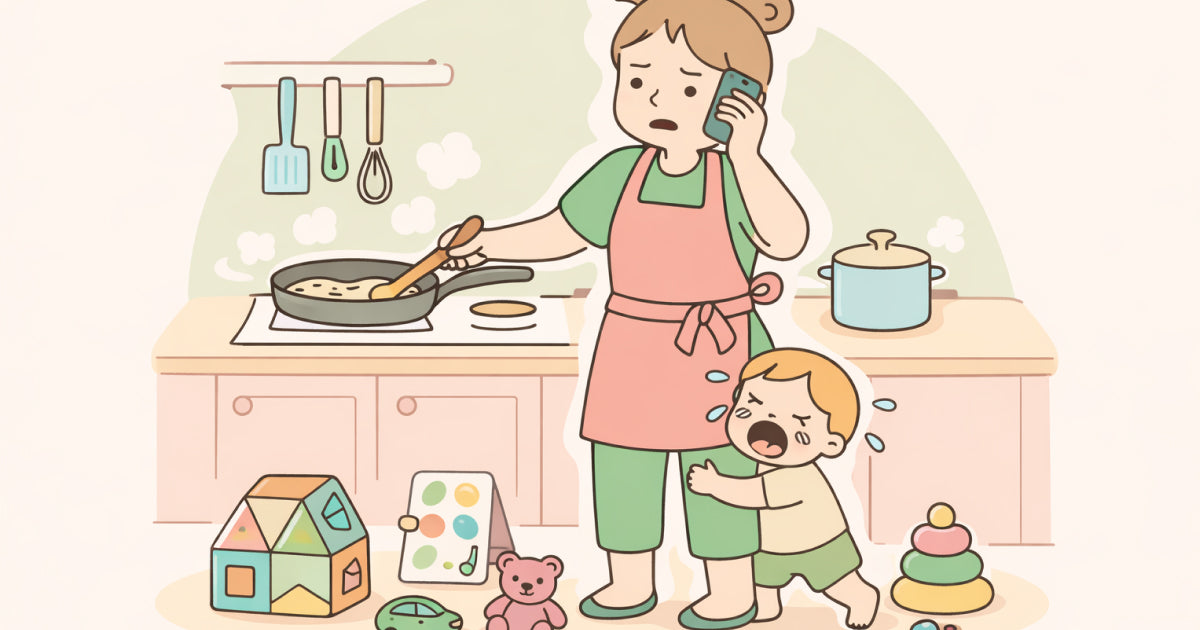
The 4:30 PM Breakdown Every Indian Parent Knows
It's 4:30 PM in Mumbai. You've just started chopping vegetables for dinner when you hear it:
"Mumma, I'm bored."
You set down the knife. "Beta, go play with your toys."
Two minutes later: "Mumma, come play with me!"
You try again: "I'm cooking dinner. You can play by yourself for a little while."
Thirty seconds pass. "But Mumma, I don't know what to do!"
Sound familiar?
If you're an Indian parent in 2026, this scenario plays out daily—sometimes hourly. Your child has a room full of toys worth thousands of rupees. They have dolls, cars, building blocks, art supplies, and that expensive STEM kit from last Diwali. Yet the moment you need just 30 minutes to cook dinner, respond to work emails, or simply catch your breath, your child seemingly forgets how to entertain themselves.
You're not imagining this. And it's not your parenting failing.
Your child genuinely can't play alone—but not for the reasons you think.
Recent research from the Indian Institute of Child Psychology (2025) reveals a startling trend: children's capacity for independent play has decreased by 47% over the past decade. Meanwhile, parental burnout in Indian metros has increased by 63%, with "constant attention demands" cited as the primary stressor.
The good news? This isn't a personality flaw or developmental delay. It's a fixable skill gap—and this article provides the exact 3-step system thousands of Indian parents are using to successfully teach independent play activities.
By the end of this guide, you'll understand why your child won't play alone, what's really causing the constant "Mumma, I'm bored," and most importantly, how to build the focused play habits that give both you and your child the space you need.
The Real Reason Your Child Can't Play Independently (It's Not What You Think)
It's Not Lack of Toys
Walk into most middle-class Indian homes today, and you'll find toy boxes overflowing. Yet the toddler won't play alone for even five minutes.
Here's the paradox: More toys actually make independent play harder.
When children have too many choices, they experience decision paralysis. Their developing brains can't filter options, so they default to the easiest choice—getting an adult to direct their play.
The Research: A landmark study from the University of Toledo (2017, still highly cited in 2026) found that toddlers with fewer toys engaged in longer, more creative play sessions. Children with 4 toys played for an average of 3x longer than children with 16 toys.
It's Not Screen Time (Not Entirely)
Yes, excessive screens fragment attention. But the real issue runs deeper.
Digital entertainment trains children's brains to expect:
- Immediate rewards (tap, get instant response)
- Constant novelty (algorithm-driven endless content)
- External direction (app tells them what to do next)
- Passive consumption (no effort required)
When you then ask them to self-direct play—to generate their own ideas, sustain interest without external rewards, and persist through the frustration of creation—their brains literally don't have the neural pathways built yet.
Indian Context: Post-pandemic, children in metro cities like Delhi, Bangalore, and Hyderabad spend an average of 5.2 hours daily on screens (NCERT data, 2024). This isn't judgment—it's reality for working parents managing hybrid schedules. But it explains why attention span in children has become Indian parents' #1 concern.
The Real Culprit: Attention Muscle Atrophy
Think of focus like a muscle. Every time your child plays independently—figuring out how blocks connect, creating stories with toys, solving puzzle challenges—they're exercising that muscle.
But modern childhood provides fewer and fewer opportunities:
Scheduled Activities: Music class, swimming, tutoring—all adult-directed Screen Entertainment: Passive consumption, no effort required
Interrupted Play: "5 more minutes, then we're leaving!"—constant disruption Quick-Win Toys: Press-button-get-result toys that don't build persistence
The result? The attention muscle has atrophied from lack of use.
Your child isn't lazy, difficult, or overly needy. They literally haven't developed the neural circuitry for sustained, self-directed engagement because they've had limited opportunity to build it.
This is exactly what Kugloo's "Built for Focused Play" philosophy addresses—providing the right conditions and tools to exercise that attention muscle until it's strong.
The Hidden Cost of Constant "Mumma, I'm Bored"
Before we dive into solutions, let's acknowledge what this pattern costs:
For Parents
- Burnout and resentment: You can't complete basic tasks without interruption
- Work-life stress: Impossible to take calls or meet deadlines from home
- Relationship strain: Partners frustrated by the "second shift" of constant child entertainment
- Lost self-care: No time for exercise, hobbies, or mental health
- Guilt cycles: Feeling bad about feeling frustrated with your own child
For Children
- Underdeveloped executive function: Skills like planning, organizing, and self-regulation lag
- Dependence on external validation: Constant need for approval or direction
- Lower frustration tolerance: Quitting easily when things get hard
- Weaker creativity: Waiting for adults to provide ideas rather than generating their own
- Attention difficulties: Struggling to sustain focus in school and activities
The stakes are real. But the solution is surprisingly straightforward when you understand the mechanics.

The 3-Step System: Teaching Independent Play That Sticks
This isn't theory. This is the exact system Kugloo developed after working with 10,000+ Indian families, refined through developmental psychology research and real-world testing.
Step 1: Create the Right Play Environment (The Foundation)
Independent play doesn't happen in chaos. Your child needs specific environmental conditions.
The Toy Rotation System
Instead of all toys available all the time:
- Select 8-12 toys that encourage open-ended play (more on this below)
- Store the rest in closed bins out of sight
- Rotate every 2-3 weeks to maintain novelty without overwhelm
Why This Works: Limited choices eliminate decision paralysis. When your child sees 4-5 clear options instead of 50 toys dumped together, their brain can actually make a choice and commit.
The Focused Play Zone
Designate a specific area as the independent play space:
- Low-distraction: Not in front of TV, away from high-traffic areas
- Well-lit: Natural light when possible
- Comfortable: Soft mat or rug, pillows for reading corner
- Organized: Clear bins or shelves where toys have specific homes
The "Yes Space" Principle
Everything in this zone should be:
- Safe for unsupervised play (age-appropriate, no choking hazards)
- Available without asking permission
- Acceptable to use creatively (blocks can become anything, art supplies are for creation)
When children know they can freely explore without constant "don't touch that," "be careful," or "ask first," they relax into genuine play.
Investment: ₹1,500-₹3,000 for organizational bins, mat, and setup Time Required: One afternoon to organize Payoff: Foundation for all subsequent independent play
Step 2: Choose the Right Toys (The Fuel)
Not all toys encourage self-directed play activities. The wrong toys actively prevent it.
The Focused Play Toy Test
Before buying or keeping any toy, ask these 3 questions:
- Can it be used 10 different ways? (Open-ended = yes, single-purpose = no)
- Does it require my child to problem-solve? (Active engagement = yes, passive consumption = no)
- Will it hold attention for 20+ minutes? (Deep play = yes, quick novelty = no)
Toys That Build Independent Play
For Toddlers (Ages 2-4):
-
Wooden blocks (classic for a reason): ₹799-₹1,999
- Infinite building possibilities, grows with skill level
-
Simple puzzles (15-30 pieces): ₹399-₹899
- Self-correcting, clear success criteria
-
Pretend play sets (kitchen, doctor, tools): ₹799-₹1,699
- Child directs the story, no right/wrong way
-
Art supplies (crayons, paper, stickers): ₹299-₹799
- Pure creation, deeply absorbing
For Preschoolers (Ages 4-6):
-
Building systems (LEGO, magnetic tiles): ₹1,499-₹2,999
- Complex enough to challenge, flexible enough to succeed
-
Dress-up clothes and props: ₹599-₹1,299
- Imaginative play that can last 45+ minutes
-
Pattern and sorting games: ₹699-₹1,499
- Engaging logic challenges
-
Craft kits (age-appropriate independence): ₹799-₹1,999
- Following steps builds executive function
For Early Elementary (Ages 6-8):
-
Advanced building sets (gears, robotics): ₹2,499-₹5,999
- Engineering challenges that absorb attention
-
Strategy games (can play solo or teach siblings): ₹899-₹2,499
- Develops planning and sequencing
-
Science experiment kits: ₹1,499-₹3,999
- Self-directed discovery
-
Art and craft supplies (more sophisticated): ₹999-₹2,999
- Creative projects with complexity
Toys to Avoid for Independent Play:
- ❌ Electronic toys with fixed responses (press button, get same result)
- ❌ Single-purpose toys (can only be used one way)
- ❌ Toys requiring constant adult help (frustration leads to "Mumma, help!")
- ❌ Trend-based toys (lose interest quickly once novelty fades)
- ❌ Cheap, flimsy toys (break easily, causing frustration)
The Kugloo Difference: Every toy in our screen-free activities for kids collection passes the 3-question test. We curate specifically for toys for independent play India, eliminating the guesswork for overwhelmed parents.
Step 3: Build the Habit Gradually (The Training)
This is where most parents fail. They set up the space, buy the toys, then expect instant 45-minute independent play sessions.
It doesn't work that way.
How to teach independent play requires gradual scaffolding:
Week 1: The 5-Minute Start
- After breakfast, say: "It's independent play time! You can choose one toy from your play corner."
- Set a visible timer for 5 minutes
- Stay nearby (same room) but don't engage unless child is in danger
- When timer rings, give enthusiastic praise: "You played by yourself for 5 whole minutes! That's wonderful!"
Key: Even if they didn't play perfectly, praise the attempt. You're building positive association.
Week 2: Extend to 10 Minutes
Same process, longer duration. Your child's attention muscle is strengthening.
If they interrupt:
- Acknowledge kindly: "I see you want to show me something"
- Redirect gently: "I'm excited to see it when the timer rings"
- Return to what you were doing
Week 3-4: Reach 20-30 Minutes
By now, the pattern is established. Most children can reach 20-30 minutes of sustained play.
If progress stalls:
- Rotate toys to refresh interest
- Check if toys match current skill level (too easy = boredom, too hard = frustration)
- Ensure basic needs are met (not hungry, tired, or needing bathroom)
Month 2+: Building to 45-60 Minutes
This is the focused play sweet spot where real cognitive development happens.
Support strategies:
- Consistent timing: Same time daily builds routine (many parents use 4-5 PM before dinner prep)
- Special toys: Certain toys only available during independent play time
- Gradual separation: Once 30+ minutes is consistent, you can move to adjacent room
- Occasional check-ins: Pop head in every 15 minutes with encouraging smile, then leave
What Success Looks Like:
After 6-8 weeks of consistent practice, most parents report:
- ✓ Child plays independently 45-60 minutes while parent cooks/works
- ✓ Fewer "I'm bored" complaints throughout the day
- ✓ Child initiates independent play without prompting
- ✓ Deeper, more creative play (elaborate stories, complex constructions)
- ✓ Better frustration tolerance and problem-solving
This is the "one focused hour at a time" that Kugloo champions—not just for parents' convenience, but because it builds the attention capacity children desperately need.

Troubleshooting: When the System Hits Snags
"My child cries the moment I leave the room"
This is normal, especially at first. You're changing a pattern they've come to expect.
Solutions:
- Start with you visible in the same room for 2-3 weeks
- Gradually increase distance (sitting across room, then doorway, then adjacent room)
- Use a special "comfort item" during independent play time
- Return briefly if truly distressed, but stay calm and matter-of-fact
Remember: Whining ≠ distress. Learn to distinguish between protest (they want you) and genuine need (they need you).
"My child only plays for 3 minutes then quits"
Check these factors:
- Toy match: Is it too easy (boredom) or too hard (frustration)?
- Energy level: Is child tired, hungry, or overstimulated?
- Expectations: Are you expecting 30 minutes when they're still building 5-minute capacity?
- Adult intervention: Are you jumping in too quickly to "help"?
Most common fix: Lower your time expectations and build more gradually.
"We don't have space for a dedicated play zone"
You need less than you think:
- A corner of the living room works fine
- A shelf or small cupboard for toy rotation
- A mat or rug (₹799-₹1,999) to define the space visually
Indian apartment reality: Many families successfully use a 3x3 foot corner. The key is consistency and organization, not size.
"My child says the toys are boring"
Translation: "These toys require effort and I'm not used to that."
Response:
- Don't immediately buy new toys (reinforces external entertainment seeking)
- Rotate existing toys to create novelty
- Model play: Occasionally sit and build something cool, then walk away
- Give it 2 weeks—once the attention muscle strengthens, "boring" toys become fascinating

The Long-Term Payoff: What Independent Play Actually Builds
When you invest in teaching montessori independent play and quiet time activities for kids, you're not just buying yourself 45 minutes to cook. You're building:
Executive Function Skills
- Planning (what to build/create)
- Organization (gathering needed materials)
- Task initiation (starting without prompting)
- Sustained attention (staying with one activity)
- Cognitive flexibility (adapting when plans change)
Emotional Regulation
- Frustration tolerance (working through challenges)
- Self-soothing (managing disappointment without adult rescue)
- Delayed gratification (completing projects over time)
Creativity and Imagination
- Generative thinking (creating own ideas)
- Problem-solving (figuring out how to make vision reality)
- Divergent thinking (multiple solutions to challenges)
Academic Readiness
- Attention span for schoolwork
- Independence in completing tasks
- Persistence through difficult problems
- Intrinsic motivation (not constantly seeking rewards)
Life Skills
- Comfort with solitude (not needing constant stimulation)
- Self-reliance (confidence in own abilities)
- Introspection (understanding own thoughts and feelings)
Indian Context: With academic competition intensifying and entrance exams starting younger, these skills provide genuine competitive advantage. Children who can sustain focus, work independently, and persist through challenges perform better academically—not because they're "smarter," but because they have stronger executive function.
Frequently Asked Questions About Independent Play
1. At what age should children be able to play independently?
Developmental milestones for independent play activities vary, but general guidelines: Ages 1-2: 5-10 minutes of independent play is appropriate; Ages 2-3: 15-20 minutes is realistic; Ages 3-4: 20-30 minutes is achievable; Ages 4-5: 30-45 minutes is expected; Ages 5+: 45-60+ minutes is normal. However, these assume the child has been systematically taught independent play. If you're starting from scratch with an older child who hasn't developed this skill, begin with shorter intervals regardless of age and build gradually.
2. Why does my child constantly say "I'm bored" even with lots of toys?
"I'm bored" rarely means insufficient entertainment options. It usually signals one of three things: (1) Decision paralysis from too many toy choices—reduce options dramatically; (2) Attention muscle weakness—the child hasn't developed capacity for self-directed play and defaults to seeking adult direction; (3) Dopamine adaptation—excessive screen time has trained the brain to expect higher stimulation levels than physical toys provide. The solution isn't more or better toys—it's teaching the skill of self-directed play activities through the 3-step system: environment, right toys, gradual training.
3. How can I keep my toddler busy while cooking dinner?
For keep toddler busy while cooking, use the "Kitchen Helper Learning Tower" approach (₹2,499-₹4,999 for sturdy models) combined with strategic toy placement. Set up a focused play zone nearby with 3-4 high-engagement toys rotated weekly: busy boards, shape sorters, or simple puzzles. Start with 5-minute independent play sessions, gradually increasing. Alternatively, create "kitchen activities" like pouring dried beans between containers, sorting plastic containers by size, or "washing" vegetables in a small basin. The key is establishing this as daily routine at consistent time (4:30-5:30 PM for most families), building the attention capacity gradually over 4-6 weeks.
4. Is it normal for my child to always want my attention?
Yes, especially in today's parenting culture. Modern Indian parenting has shifted toward constant engagement—responding immediately to every request, providing continuous entertainment, and rarely allowing children to experience boredom or solve problems independently. While attentiveness is positive, children also need to develop autonomy. If your child can't tolerate even 10 minutes without adult attention, it indicates they haven't built the attention span in children necessary for age-appropriate independence. This isn't a character flaw—it's an underdeveloped skill that responds beautifully to systematic teaching. Most children can learn independent play within 4-8 weeks using consistent training.
5. What are the best screen-free activities for kids who are used to tablets?
Transitioning from screens to screen-free activities for kids requires strategic substitution, not cold-turkey removal. Choose toys that provide similar engagement types: For building games: Try magnetic tiles (₹1,499-₹2,999) or LEGO sets; For creative apps: Provide art supplies, playdough, or craft kits; For puzzle games: Offer physical puzzles, pattern blocks, or shape sorters; For videos: Try audiobooks or storytelling cards. The key is matching engagement level while building attention muscle. Expect 2-3 weeks of adjustment where your child claims everything is "boring"—persist through this as their brain recalibrates dopamine expectations. Combine screen reduction with the gradual independent play training system for best results.
6. How do I teach independent play without feeling guilty?
Indian parenting culture intensifies guilt around not constantly engaging with children. Reframe this: Teaching independent play isn't neglect—it's essential skill-building. Research shows children who develop strong independent play capacity have better executive function, higher creativity, and stronger academic performance. You're not abandoning your child; you're giving them crucial developmental opportunities. Start small (5 minutes), maintain nearby presence initially, and recognize that temporary whining doesn't indicate harm. Most parents report feeling guilty for 1-2 weeks, then experiencing profound relief as children thrive with newfound independence. Remember Kugloo's vision: building children with strong attention spans who engage deeply—this requires practice in self-directed focus.
7. What if my child just isn't interested in toys for independent play India options?
"Not interested" usually means one of three fixable issues: (1) Skill mismatch—toys are too advanced (frustrating) or too simple (boring); (2) Habit deficit—child hasn't experienced the satisfaction of sustained play because sessions were always interrupted; (3) Comparison thinking—physical toys seem boring compared to screen entertainment. Solutions: Match toys precisely to current skill level (observe what captures attention for even 30 seconds, then provide similar challenge level); commit to 2-3 weeks of consistent independent play time before judging; reduce screen exposure during this training period. Consider starting with highly engaging montessori independent play materials like water pouring, sensory bins, or practical life activities that provide immediate, satisfying feedback while building focus capacity.
The Choice: Reactive Parenting or Proactive Skill-Building
You have two paths forward:
Path 1: Continue Current Pattern
- Constant interruptions while cooking, working, or resting
- "Mumma, I'm bored" every 10 minutes
- Screens as default babysitter (with accompanying guilt and attention concerns)
- Increasing frustration and burnout
- Child enters school unprepared for independent work
- Attention and focus challenges compound over time
Path 2: Invest 6-8 Weeks in Teaching Independent Play
- 45-60 minute windows of uninterrupted time daily
- Child develops genuine interests and deeper play
- Confidence and self-reliance strengthen
- Better school readiness and academic performance
- Stronger executive function for lifetime benefit
- Family harmony improves dramatically
The effort is front-loaded. The first 2-3 weeks require consistency and persistence through protests. But the payoff compounds for years.
This is exactly what "Built for Focused Play" means at Kugloo—we provide the tools, systems, and support to help Indian families make the shift from constant entertainment to meaningful, self-directed engagement.
Because when your child can play alone while you cook, work, or simply breathe, everyone wins. But more importantly, they're building the attention capacity that will serve them throughout life—in school, career, relationships, and personal fulfillment.
The ability to focus deeply is the competitive advantage of the 21st century. And it starts with teaching a toddler to play with blocks for 20 minutes while you chop vegetables.
Your Next Step: The Focused Play Starter System
Teaching how to teach independent play doesn't require expensive programs or months of research. It requires the right environment, right tools, and consistent approach.
Kugloo's Independent Play Starter Kit includes:
✓ Curated toy selection guide (age-specific recommendations)
✓ Week-by-week training plan (exact scripts and timing)
✓ Troubleshooting support (WhatsApp access to play specialists)
✓ Toy rotation system templates (organizational printables)
✓ Progress tracking tools (celebrate small wins)
Editor’s Recommendations
Start Your Focused Play Journey Today
Explore Kugloo's complete "Built for Focused Play" collection:
🎯 Shop All Focus-Building Toys – Free shipping on orders above ₹499
💬 Join Our Parent Community: WhatsApp us at +91-9625965890 for personalized play recommendations based on your child's age and interests.


Recent Post


Tags


